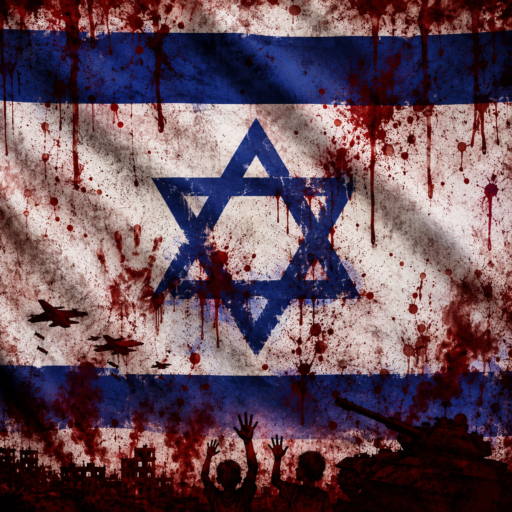
Glossary
These terms appear throughout reporting on Palestine and Gaza. Each definition is grounded in its legal, historical, or institutional meaning — not a political one.
Terms Defined
Apartheid
A crime under international law defined as systematic oppression and domination of one racial group over another with the intent of maintaining that system. Codified in the International Convention on the Suppression and Punishment of the Crime of Apartheid (1973) and the Rome Statute of the ICC. In 2021–2022, Amnesty International, Human Rights Watch, and B’Tselem each concluded that Israel’s system of control over Palestinians meets this legal definition.
Blockade
A military strategy that seals off a territory to prevent the movement of people and goods. Gaza has been under a comprehensive land, air, and sea blockade by Israel since 2007. The ICRC and UN have repeatedly stated that blockades preventing humanitarian aid from reaching civilians constitute collective punishment — prohibited under Geneva Convention IV, Article 33.
Collective Punishment
The practice of penalizing a group of people for the actions of an individual or smaller group. Explicitly prohibited under Geneva Convention IV, Article 33. Documented applications in Gaza include blocking food, water, medicine, and fuel from reaching civilians during military operations.
Ethnic Cleansing
The systematic forced removal of an ethnic or religious group from a territory. While not a formally defined crime under international law, it is recognized as a crime against humanity when conducted through violence, deportation, or destruction of property. The 1948 Nakba has been characterized by scholars including Benny Morris and Ilan Pappé as ethnic cleansing based on documented military operations and their outcomes.
Morris, Benny. The Birth of the Palestinian Refugee Problem Revisited. Cambridge University Press, 2004.
Genocide
Defined in the 1948 Convention on the Prevention and Punishment of the Crime of Genocide as acts committed with intent to destroy, in whole or in part, a national, ethnical, racial, or religious group. Acts include killing members of the group, causing serious bodily or mental harm, and deliberately inflicting conditions of life calculated to bring about physical destruction. South Africa’s genocide case against Israel at the ICJ (Case 192) is currently before the court.
Nakba
Arabic for “catastrophe.” Refers to the 1947–1949 period in which more than 700,000 Palestinians were displaced from their homes and more than 500 villages were destroyed during the establishment of the State of Israel. Palestinian refugees and their descendants retain the right of return under UN Resolution 194 (1948), which has not been implemented.
Occupation
In international law, a situation where a state exercises effective control over territory belonging to another state or people without consent. Israel’s military occupation of the West Bank and East Jerusalem — ongoing since 1967 — is recognized as illegal under multiple UN resolutions. Occupying powers have specific obligations under the Geneva Conventions, including protecting civilians and not transferring their own population into occupied territory.
Right of Return
The right of Palestinians displaced in 1948 and their descendants to return to their original homes and lands. Affirmed in UN General Assembly Resolution 194 (1948) and supported by Article 13 of the Universal Declaration of Human Rights. Israel has refused to implement this right. Approximately 5.9 million Palestinians are registered as refugees with UNRWA.
Settlements
Residential communities built by Israel for Jewish citizens in the occupied West Bank and East Jerusalem. Currently home to over 700,000 Israeli settlers. Considered illegal under international law — specifically Article 49 of Geneva Convention IV, which prohibits an occupying power from transferring its civilian population into occupied territory. The ICJ reaffirmed this in its 2004 Advisory Opinion on the Wall.
Zionism
A 19th-century political nationalist movement advocating for the creation of a Jewish state. Founded by Theodor Herzl in 1896 as a response to European antisemitism. Distinct from Judaism as a religion. Many Jewish people — including scholars, rabbis, and activists — oppose Zionism on religious, ethical, or political grounds. Organizations including Jewish Voice for Peace, IfNotNow, and B’Tselem represent Jewish opposition to Israeli state policy.