By Bashaer Abu Muammar
In Gaza, the sound of drones does not fade. It lingers, day and night, above shattered neighborhoods and fractured lives. But beneath that constant noise, another threat is quietly growing, one that families say they can neither predict nor control. Rats.
What was once a limited problem has expanded into a daily reality for families living among rubble and in damaged homes. The destruction of infrastructure, combined with the collapse of sanitation systems, has created an environment where rodents thrive.
For Khalil Al-Mashharawi, the danger became painfully real one night inside what remains of his home. “I woke up to my son screaming,” he said.
His three-year-old child, Ahmed, had been sleeping when Khalil found him covered in blood, with bites on his hand and leg. At first, he could not understand what had happened. “I didn’t expect it was a rat,” he said. “But then I saw it.”
The animal disappeared quickly into the surrounding rubble. Khalil tried to kill it, but failed.
Since that night, fear has reshaped the family’s life. Khalil and his pregnant wife now take turns staying awake through the night, guarding their child. Ahmed wakes frequently, crying and afraid.
Before the war, Khalil says, this was unimaginable. “We had a stable life. We didn’t suffer from rats.”
Today, that reality has changed, not only through direct attacks, but through the constant presence of rodents in daily life.
Across Gaza, families report that rats are invading their living spaces, particularly at night. In overcrowded shelters and partially destroyed homes, food is often stored in fragile containers, easy for rodents to tear through.
“They eat everything,” Khalil added.
Flour, bread, grains, and vegetables are frequently found damaged or contaminated. Food that families depend on for days can be lost overnight, leaving them with difficult choices in a place where supplies are already scarce.
Beyond consuming food, rats contaminate it
Droppings, urine, and contact with surfaces make what remains unsafe, increasing the risk of illness, especially for children, who are already facing weakened nutrition and limited access to healthcare.
This growing infestation is directly linked to the broader environmental collapse.
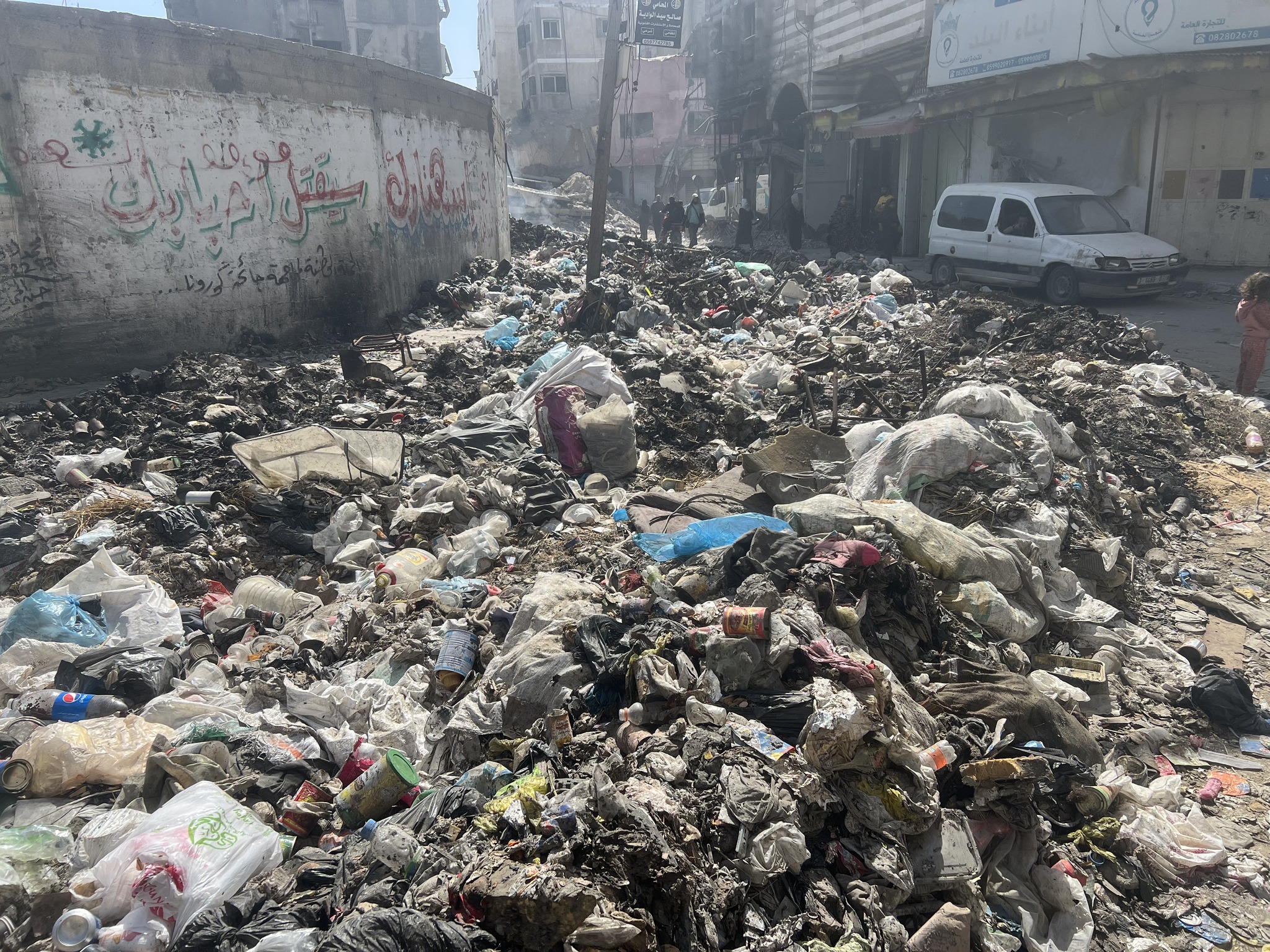
Garbage accumulates in the absence of regular waste collection. Sewage systems are damaged. Rubble provides shelter and breeding spaces. In these conditions, rodent populations expand rapidly, moving easily between destroyed buildings and populated areas.
Efforts to control the problem are extremely limited
There is little access to pest control. Families improvise, cleaning constantly, sealing food, elevating belongings, but these measures offer only temporary relief. At night, the situation becomes more severe.
As families try to sleep, rats emerge. For some, rest is interrupted not only by fear of airstrikes, but by the sound of movement inside their shelters, a reminder that even in moments of quiet, they are not safe.
Children are among the most affected. Sleeping close to the ground, they are more exposed, not only to bites, but to contaminated environments and food. The result is both physical and psychological: illness, fear, and a constant sense of insecurity within spaces that are meant to provide shelter.
What is unfolding is not simply a pest problem. It is a consequence of destruction, of systems that no longer function, of waste that cannot be managed, and of communities forced to live in conditions where even basic protection is out of reach.
In Gaza today, survival is not only about enduring what falls from the sky. It is also about confronting what emerges from the ground, in the dark, in the rubble, and inside the fragile spaces people still call home.
-Bashaer Abu Muammar is a Gaza-based journalist. She contributed this report to the Palestinian Information Center.

